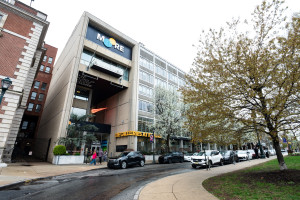
PHILADELPHIA (June 2, 2026)—Moore College of Art & Design announced today that its Boards of Trustees and Managers voted to open enrollment to students of all genders, marking a historic evolution for one of the nation’s oldest and most respected independent colleges dedicated to art and design. The decision follows an extensive period of research, strategic analysis, and community engagement begun in the fall of 2025.
For 177 years, Moore has challenged convention, expanded access, and prepared artists and designers for careers that shape the future. College leaders said the decision reflects Moore’s enduring mission as a forward-looking, barrier-breaking institution grounded in creative excellence, artistic bravery and academic rigor, one-to-one mentoring, and a belief that a career-focused art and design education has the power to transform lives.
“This decision reflects both who Moore has always been and who we must continue to become for the creatives who thrive here and for the City of Philadelphia,” said Cathy Young, president of Moore College of Art & Design. “Moore has always believed that creativity demands courage. Opening enrollment to students of all genders ensures that future generations of artists and designers can access the deeply personal, career-focused creative education that defines this institution. We are evolving our legacy and respecting our past.”
Young added that the decision was rooted in both mission and stewardship.
“The world of higher education is changing rapidly, and responsible institutions must be willing to lead rather than react,” Young said. “Moore is acting thoughtfully and strategically from a position of strength to preserve the vibrancy, sustainability, and distinctiveness of this institution for generations to come.”
The decision builds on changes already underway at Moore. In 2020, the College changed its enrollment policy to welcome nonbinary and gender-nonconforming students. Moore’s graduate and continuing education programs already serve students of all genders.
College leaders emphasized that the qualities that define the Moore experience will remain unchanged: close creative collaboration, mentorship, artistic experimentation, career intentionality, individuality, inclusivity, and a deeply supportive community rooted in Philadelphia with global reach.
“Our size is our superpower,” Young said. “It allows for a highly mentored environment where excellence incubates. That will not change. If anything, Moore will grow even stronger through the addition of new perspectives, experiences, and creative voices.”
Beginning in fall 2025, a working group composed of board members began studying national trends in higher education, enrollment patterns, financial models, and the unique position of independent art and design colleges. Based on this research and analysis, the boards decided to launch an open community engagement process to examine this question. During the spring 2026 semester, students, alumni, faculty, and staff participated in 29 forums, listening sessions, and feedback opportunities, with nearly 500 members of the Moore community contributing to the conversation.
Those discussions revealed a broad consensus around Moore’s importance as a transformative institution, even as perspectives differed on the path forward.
“This process reaffirmed how deeply people care about Moore and what it represents,” Young said. “There was unanimous belief in the importance of preserving Moore as a place where students discover their authentic voice, develop creative confidence, and find a true sense of belonging and shared purpose. There were certainly differing opinions on how to address our future, and the Boards considered all perspectives. In the end, the Boards determined this to be the best path forward for a future that endures and thrives, particularly amidst the realities of the higher education landscape.”
The college’s decision reflects broader realities reshaping higher education nationally. Since the 1950s, the number of women’s colleges has declined by 90% to just 28 today. Since 2006, 18 women’s colleges have transitioned to coeducational admissions. Demographic shifts, declining college enrollment, and evolving student preferences are placing increasing pressure on independent colleges nationwide, particularly specialized art and design institutions.
Research gathered by Moore over more than a decade found that only 6% of prospective students considered the College’s identity as a women’s college to be a deciding factor in choosing Moore, while 25% viewed it as a reason not to enroll.
The new admissions policy is planned to go into effect for the 2027-2028 academic year. Additional details regarding implementation and future enrollment timelines will be shared in the coming months.
About Moore College of Art & Design
Moore College of Art & Design prepares students for successful, high-impact careers. Our dynamic programs and uniquely inclusive environment foster creative excellence and amplify artistic potential, preparing our graduates to thrive in the ever-evolving landscape of art and design. For more information about Moore, visit www.moore.edu and follow us on social media @moorecollegeart.
For press inquires, contact:
Gabrielle Lavin Suzenski
Vice President of Creative Strategy
glavin@moore.edu | 215.965.4044
